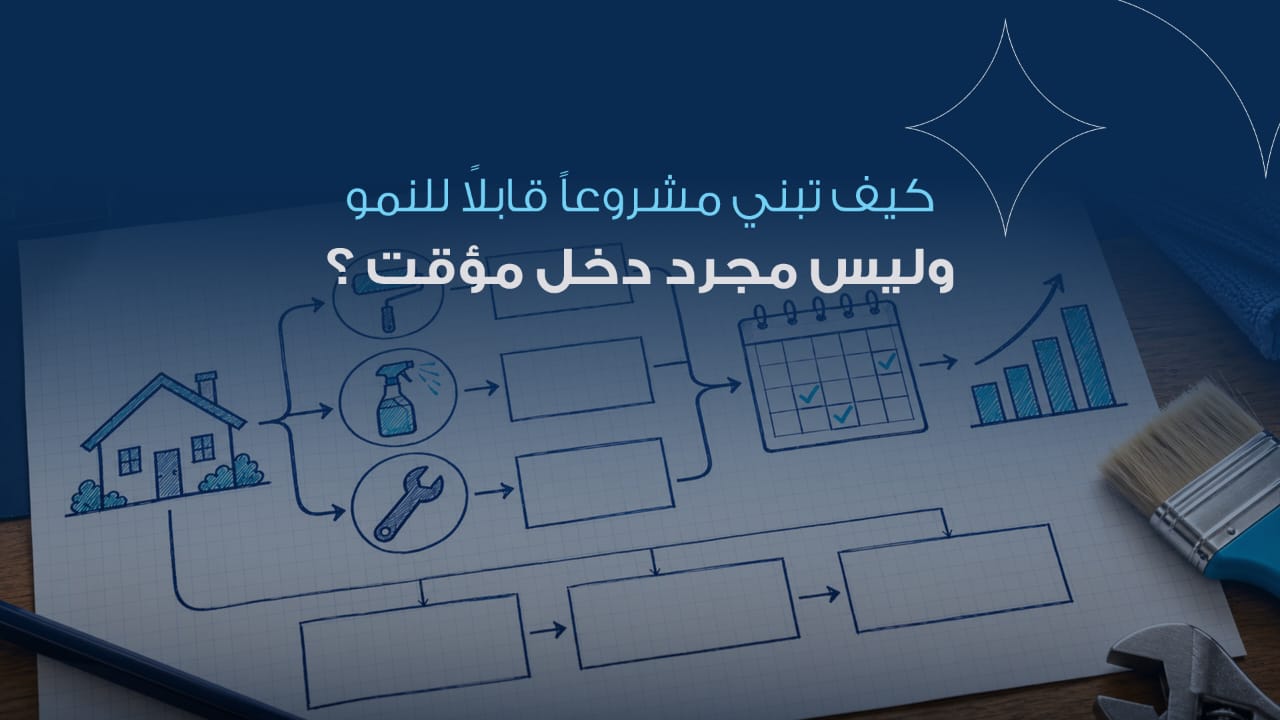
From a Small Idea to a Project Capable of Expansion
In the world of startups, growth may appear on the surface as a beautiful dream: more customers, more revenue, a larger team, and wider reach.
But the truth is that growth is not merely an increase in numbers; it is a sensitive transitional phase that may elevate the project to a new level of maturity, or place it under pressure it cannot withstand—causing it to collapse or distort.
Therefore, growth management is the ability to move from “we are experimenting” to “we are building something worth sustaining,” without losing the spirit of the project, exhausting the team, or confusing the customers.
At Hosa Wa Nos, we do not view growth as a race of numbers, but as a journey of maturity for the project, its founders, and the team behind it. For us, growth means that the project becomes clearer in its identity, more balanced in its decisions, and more capable of serving its clients deeply—not turning into an exhausting machine demanding more effort without offering meaningful value.
First: Understanding the Meaning of Growth Before Pursuing It
Before we think about “how do we grow?”, we must ask “into what do we want to grow?”.
Many startups jump directly into expanding services, entering new markets, or increasing advertising spending without pausing to understand the type of growth that suits them at this stage.
Growth may be in the number of customers, in service quality, in team strength, or in the depth of the relationship with the local market. A startup in its early stages may need growth in understanding before it needs growth in size—understanding ourselves, our customers, our strengths and weaknesses. This type of growth does not appear in financial reports, but it reflects on every future decision.
Growth management begins with this simple question: what do we want the project to look like after one or three years? Do we want it to be merely bigger, or more balanced, more professional, and more capable of sustaining itself? When the picture becomes clear, growth becomes intentional—not a random reaction to opportunities that appear here and there.
Second: The Risks of Unplanned Growth in Startups
Unplanned growth is like adding a new floor to a house whose foundations were never properly inspected. The floor may look beautiful, but any slight shake could reveal that the entire structure is at risk. In startups, the most dangerous aspect of growth is when it comes faster than the team, systems, and resources can handle.
When the number of customers suddenly increases without a clear system to serve them, the team shifts into a constant “firefighting” mode, and the project begins losing its reputation due to mistakes, delays, and poor follow-up. And when services expand without clarity in identity, the project becomes “doing everything” but is not known in the market as “specialized in something,” causing its impact to fade in customers’ minds.
Likewise, unplanned growth may strain the project’s cash flow.
Increasing costs (salaries, equipment, marketing campaigns) without precise cash-flow management may make the project appear successful from the outside, while internally it suffers financial tightness that makes it fragile in the face of any small crisis.
Growth management here is the art of protecting the project from itself—from its excessive enthusiasm and the founders’ desire to leap quickly. It is the ability to say “no” to certain opportunities because accepting them now may exhaust the project more than benefit it.
Third: A Clear Identity as an Anchor for Growth
A startup that grows without a clear identity is like a ship increasing in size but not knowing which port it is heading to.
Identity is not just a logo or colors; it is an honest answer to the questions: who are we? For whom do we work? And what value do we add?
At Hosa Wa Nos, we consider identity the first thing that must be settled before thinking about growth. When a project knows itself well, it becomes capable of choosing the type of growth that suits it—and rejecting what does not resemble it.
A clear identity makes the team speak the same language, helps customers understand what to expect, and gives every expansion decision a criterion to measure against: does this decision strengthen our identity or confuse it?
Healthy growth is the kind that expands the impact of identity, not dissolves it. As the project grows, its message should become clearer—not disappear amid multiple services and experiments. Growth management here means reviewing every expansion step in light of identity and ensuring the project remains “itself” even as it grows.
Fourth: The Team… The Heart of Growth and Its True Engine
There is no real growth in startups without a team capable of carrying that growth. A marketing campaign may succeed in bringing a large number of customers, but if there is no prepared, trained, and aligned team, this success turns into suffocating pressure.
Growth management requires viewing the team not as a cost, but as a long-term investment—giving them time to understand the project, sharing the vision, clarifying why we grow and where we are heading, and providing a work environment that allows them to evolve as the project evolves. A team treated as part of the identity, not just an execution tool, becomes a partner in growth management—suggesting, warning, and participating in decision-making.
At Hosa Wa Nos, we believe that growth that does not reflect positively on the team is incomplete growth. As the project grows, the team must feel that this growth means something to them: opportunities to learn, more space to influence, greater clarity in roles—not just more work and more pressure.
Fifth: Systems and Processes… From Beautiful Chaos to Effective Organization
Startups often begin in a state of natural chaos: experiments, attempts, quick decisions, and constant adaptation to reality. This beautiful chaos is useful at the beginning because it allows flexibility, but it becomes dangerous when the project starts growing without transforming this chaos into a system.
Growth management means gradually shifting from person-dependent work to process-dependent work—documenting what we do, defining service steps from the first client interaction to project closure, setting quality standards, and using tools that help with tracking and documentation.
Systems do not kill the spirit; they protect it from exhaustion. When processes are clear, the team becomes capable of handling more work without feeling overwhelmed.
And when there are continuous review and improvement mechanisms, the system itself becomes a living entity evolving with the project.
At Hosa Wa Nos, we see the most beautiful moment in growth management as the one when “improvisation” turns into “written expertise,” and when the early experiences become material upon which we build a system that helps us expand confidently.
Sixth: Money and Cash Flow… The Language of Reality in the Growth Journey
Any project can talk about vision, identity, and team, but money remains the language that tests the project’s ability to survive. Growth management in startups requires deep awareness of cash flow—not just profits on paper.
Growth often means increased costs: new salaries, additional equipment, marketing campaigns, and perhaps investments in product or service development. Without clear financial planning, the project may find itself in a state of “cosmetic growth” while actually suffering financial tightness that makes it fragile in the face of any delay in payments or market crisis.
Financial growth management means knowing when to spend, on what, and how to link every expense to a clear goal. It also means being honest with ourselves: can the project handle this expansion now? Do we have enough reserves to absorb shocks? Do we have a clear vision of income sources for the coming months?
At Hosa Wa Nos, we consider money not a separate goal from meaning, but a tool to protect the project and enable it to serve its clients and team in the long term. Healthy growth respects this tool and uses it wisely—not recklessly.
Seventh: The Relationship with Customers… From a Quick Transaction to a Long Partnership
Growth in startups is not measured only by the number of new customers, but by the depth of the relationship with existing ones. Growth management means shifting from the logic of “we sell and move on” to “we build a relationship and continue.”
A customer who feels the project is growing without losing interest in them becomes a partner in this growth. When we listen to their feedback, develop our services based on their experience, and maintain consistent quality regardless of workload, we create a type of trust that turns into loyalty over time.
At Hosa Wa Nos, we see the most beautiful type of growth as when the customer transforms from a service receiver into a storyteller of the project—speaking about their experience, recommending us, and feeling that the project grows while they also grow in the quality of what they receive.
Growth management here is the art of preserving this human thread between us and those we serve—no matter how numbers increase and projects multiply.
Eighth: Continuous Learning and Safe Experimentation
A startup that stops learning loses its most important advantage: adaptability. Growth management requires the project to remain in a state of constant curiosity—asking, experimenting, reviewing, and correcting.
But experimentation during growth must be “safe,” not exposing the project to risks it cannot bear.
Continuous learning means monitoring what happens in the market, reading other projects’ experiences, analyzing what succeeded and what didn’t in our journey, and being ready to adjust the path when we discover a better way. Growth is not a straight line; it is a series of small curves we draw as we learn.
At Hosa Wa Nos, we consider every startup a living laboratory—but this laboratory needs awareness so it does not turn into chaos. Growth management here means allowing experimentation within clear boundaries and turning its results into shared knowledge within the team—not isolated experiences forgotten over time.
Ninth: Measuring Growth… Numbers That Tell a Story, Not Just Data
We cannot manage what we do not measure. But measurement in startups must be deeper than sales numbers or customer counts. Growth management requires choosing indicators that reflect the reality of what is happening—not just what looks good in reports.
We can measure customer satisfaction, response speed, execution quality, team stability, process clarity, and even the degree of identity consistency in everything we do. These indicators, when read together, tell the story of growth: are we growing healthily? Is there an aspect lagging behind? Is there a weakness that may turn into a threat if ignored?
At Hosa Wa Nos, we use measurement as a mirror—not a pressure tool. We want to see ourselves clearly, celebrate what improved, and be honest about what needs more work. Growth management here means using numbers to understand—not to scare the team or beautify reality.
Growth Management as the Art of Preserving the Spirit During Expansion
In the end, growth management in startups is not just a set of techniques—it is an attitude toward the project and professional life in general. It is choosing to let the project grow without losing its soul, expand without exhausting those behind it, and increase its impact without losing its meaning.
At Hosa Wa Nos, we believe every startup deserves a chance for healthy growth and to be accompanied on this journey with awareness—not randomness. Growth management is telling the project: “Yes, you can grow,” but with a plan, a team, an identity, respect for money, a human relationship with customers, and continuous learning.
This article is an invitation for every startup founder to view growth as a responsibility as much as an opportunity—to ask: how do I want my project to grow? With whom? And with what spirit? And when the answer becomes clear, the journey of growth management begins steadily, step by step, until the project becomes not only bigger, but deeper, more authentic, and more capable